Local authority approaches to tackle carspreading
A short guide to how councils can act against the harms of larger cars and SUVs
Introduction
Cars are becoming wider, taller and heavier year on year. The term ‘carspreading’ describes this trend, This briefing summarises the harms of carspreading and policies available to local authorities to stem those harms.
Driving the carspreading phenomenon is the surging popularity of sports utility vehicles (SUVs). From less than 5% of UK vehicle sales in 2000, SUVs made up 66% of new vehicle sales in 2025 and now constitute 32% of all cars on the road.
An in-depth version of this guide can be downloaded at the button below.
Big cars, big problems
Road danger
SUV design features like larger size, higher bonnets and greater weight compared to traditional cars can make the occupants safer, but they bring significant risks for other road users, especially children. A 2025 study concluded that a child pedestrian or cyclist is 3 times more likely to be killed in the UK when struck by an SUV compared to a small car.
Taller bonnets, typical of many SUVs, pose a further road safety risk. A 10cm increase in bonnet height raises the risk of death by 27% for vulnerable road users in the event of a collision. The average UK bonnet height now stands at 83.7cm, up from 76.9cm in 2010.
Street space
Simple geometry dictates that cars cannot get larger and larger whilst the space available in which to drive and park them remains the same without reducing the space available for other uses and users.
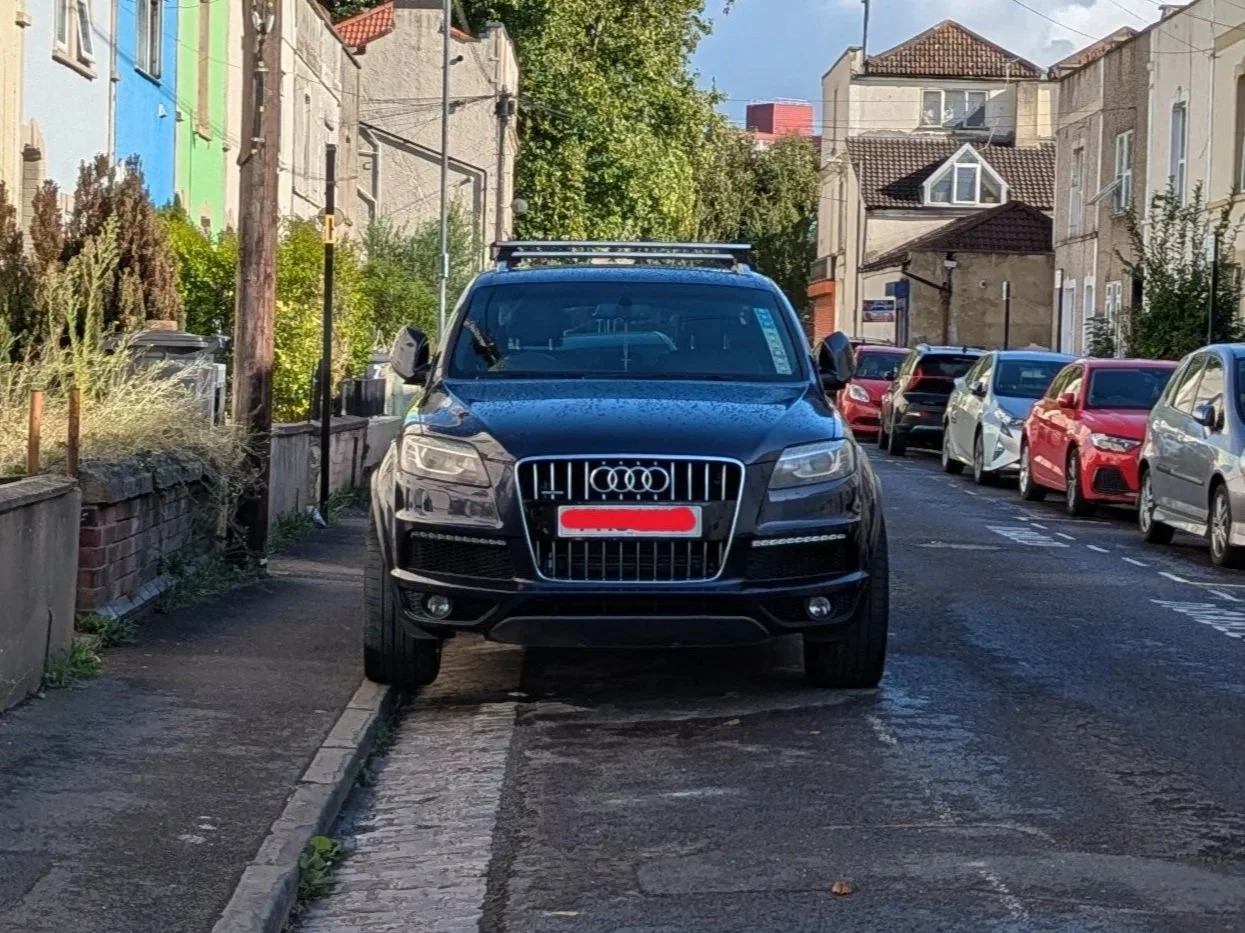
Consequences of carspreading include pavement parking, a bugbear for pedestrians and people with disabilities or visual impairments who rely on clear and uncluttered pavements. It is also a significant barrier to introducing safe cycling infrastructure.

Air pollution and surface run-off
Non-exhaust emissions like tyre (and to a lesser extend brake) wear are directly proportional to a vehicle’s weight, so a heavier SUV will produce more air pollution from these sources than a lighter car.
Notable is the fact that this applies equally - if not more so - to electric SUVs, as, due to the addition of a battery, electric SUVs are even heavier again than petrol or diesel SUVs.
What policy measures are available?
Weight-based parking surcharge
Whilst this briefing discusses “SUVs and large cars”, these are not defined terms. In writing policy, vehicle weight can be used as an accurate proxy. The introduction in 2023 of higher parking charges for SUVs in Paris, and more recently in Cardiff, were based on vehicle weight, as are similar policies in a growing number of EU cities.
The Cardiff City Parking Plan, approved in October 2025, includes: "A surcharge for vehicles over 2,400kg Revenue Weight will be introduced to encourage drivers to switch to smaller vehicles. In time, this will be reduced to 2,000kg (for non-electric vehicles). Very large vehicles (vehicles over 3,500kg Revenue Weight) will not be entitled to permits."
A detailed legal basis for a weight-based parking surcharge is given in this legal briefing. Which concludes that introduction of such an order is, in principle, within the legal powers of a Local Authority.
Two key areas where local authorities can act to slow surging SUV use are parking policy and advertising and sponsorship policy.
SUVs as accessible vehicles
Their larger interiors can make SUVs more accessible or simply comfier for disabled people, and can more readily be adapted to fit a wheelchair and other mobility aids. Consideration should always be given to the needs of disabled people and blue badge exemptions should apply to the policies above.
Advertising and sponsorship
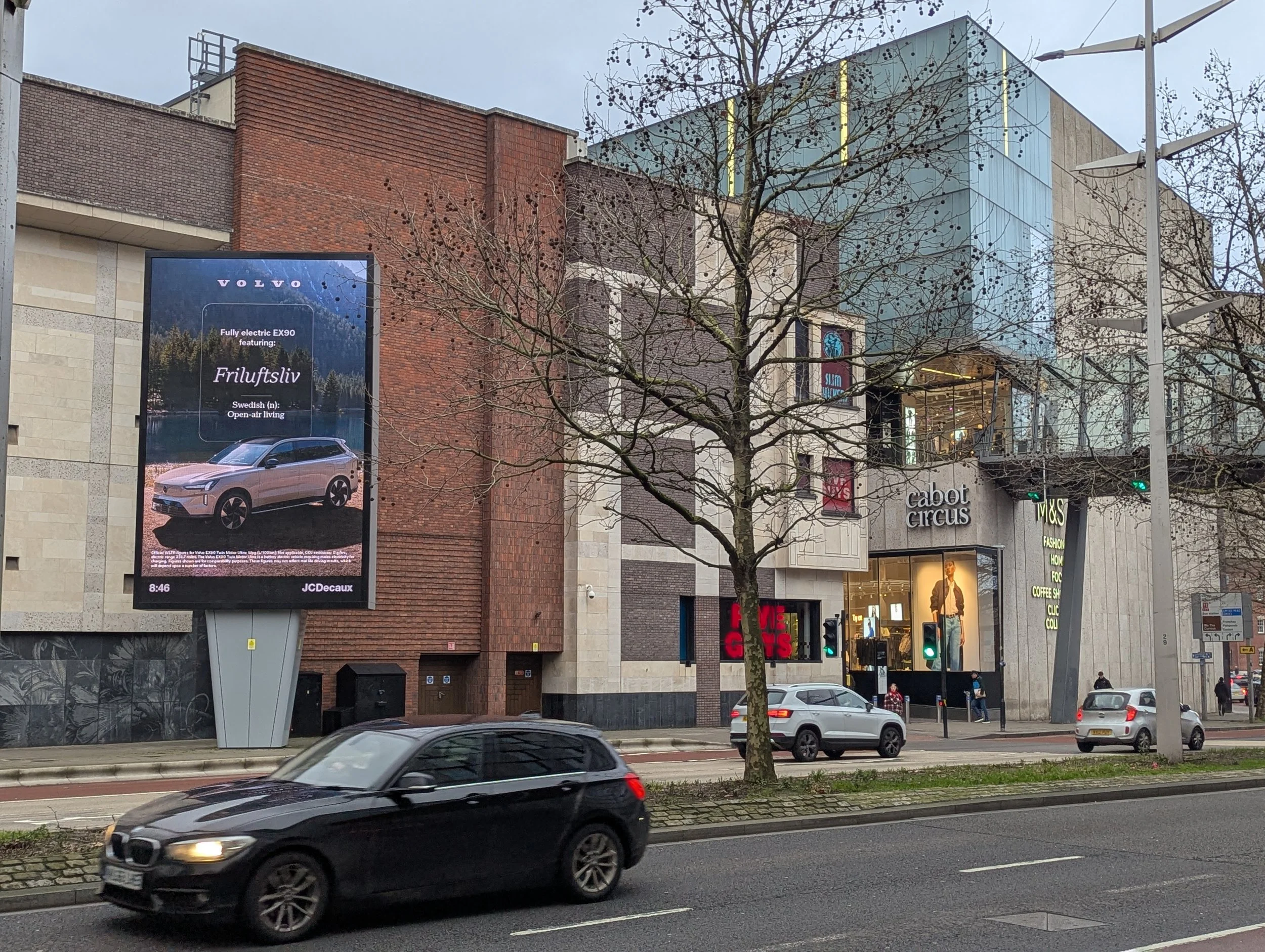
Many councils retain control over a portion of the outdoor advertising space in their jurisdiction, including bus shelter ad panels. Outdoor advertising plays a major role in promoting and normalising the products advertised, which includes SUVs.
In May 2024, Edinburgh City Council included restrictions on advertising for SUVs (including electric SUVs) in their wider suite of ‘high carbon’ advertising restrictions. Whilst this only covers 30% of outdoor advertising in the city, it is a statement of intent and a signal of leadership from the council.
Public support
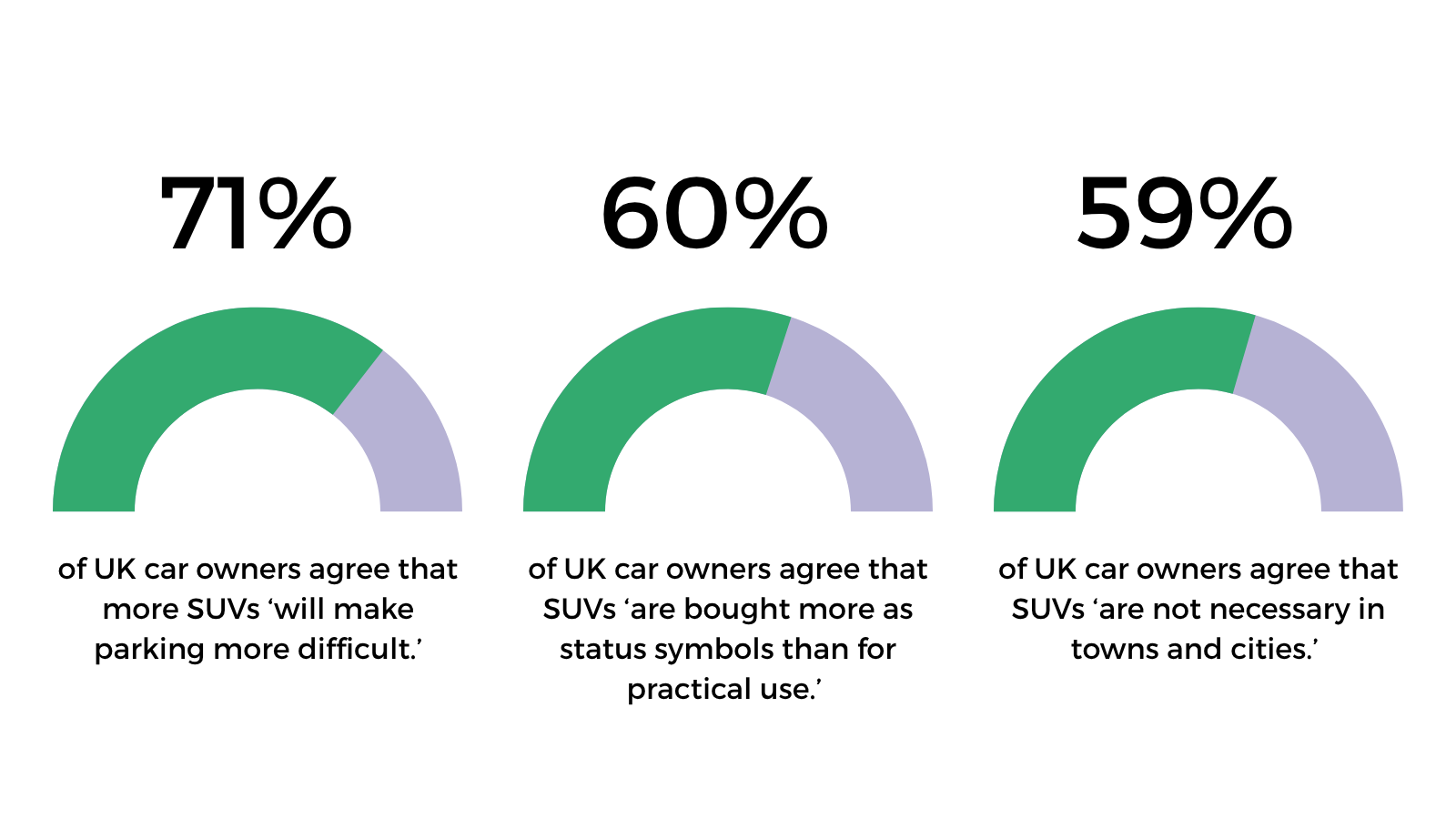
In public polling conducted by YouGov in February 2025,
71% of UK car owners agree that more SUVs ‘will make parking more difficult’
60% of UK car owners agree that SUVs ‘are bought more as status symbols than for practical use’
59% of UK car owners agree that SUVs ‘are not necessary in towns and cities’